Forest Of Flowers

Recently I saw a photo of wild flowers blooming in the middle of a busy city, part of the Forest Of Flowers initiative. I remembered the photo in part because I like the name: Forest Of Flowers. It conjures up a mental image of flowers growing in profusion, carpeting the ground, an expanse of colour and scent. A forest is a wild place, a place apart, to immerse ourselves in nature and feel surrounded and enclosed. So when it’s a forest of flowers it’s all about being surrounded by colour. A forest of trees might tower overhead, flowers will most probably grow at our feet, but even small wildflower areas can soon grow taller, flowering grasses too waving in the wind.

Photo by MM Fotovideo on Pexels.com

The Forest Of Flowers initiative is centered on a 74-acre nature reserve near York, created in 2015. There, over 40,000 trees and shrubs have been planted over the last nine years, and many, many wildflowers grow – over 30 species. And the reserve is only part of what Forest Of Flowers do. By encouraging and supporting groups large and small to sow wildflower seeds (and supplying the seeds themselves), they’re boosting wildflower growing nationwide. They also sell items like greetings cards and T-shirts. The Forest Of Flowers logo sums it up – it shows an illustration of a tree trunk surrounded by flowers and insects. Nature full of life.

Well-known research has proved how beneficial being in a forest or wood can be for mood and wellbeing, even physical health too. This research focuses on trees, known to reduce stress hormones in the body and slow heart rate and ease anxiety and sometimes physical pain. But it’s entirely possible that forests of flowers could be just as beneficial as they too surround us with nature and become a refuge. They might even be more welcoming to people who find tree forests oppressive, shady and menacing. Most flowers need light to bloom so forests of flowers will be open, bright and airy.

It would be wonderful if more and more of the groups Forest Of Flowers support to grow wild flowers could be in urban areas, patches of colour and wildness amidst the concrete. Unlike most plant or tree species, flowers don’t need a lot of space, and they grow fast. Sow wildflower seeds and they can soon transform a patch of bare earth or grow up amid other plants, even pushing through cracks in stones. So growing wildflowers is a fantastic way to see nature’s profusion in crowded urban settings. Planting a tree forest in a city is unlikely. But a forest of flowers can become a reality in little time. Contrasts of colour, form and size highlight nature’s extravagance.

To learn more about Forest Of Flowers go to https://www.forestofflowers.co.uk And think where you could sow wildflowers where you are, and transform the everyday.

Music For Every Mood

Is there truly music for every mood? With a vast array of music now only a tap or a click away, there surely has to be. The choice of musical genre, rhythm, beat, tempo, duration and performer has become endless and can feel overpowering or overwhelming. But with such choice now everyday, are there common patterns in what we choose and when?

Photo by Vika Glitter on Pexels.com

Someone I know told me the other day that she found pop and dance music more appealing than classical when she was ill recently, although she has loved classical music for years. The pop felt livelier and more stimulating – the faster tempo, the lyrics to focus on, the shorter length of each song so there was more variety. Classical music can be too long in duration if you struggle to concentrate or need a lot of mental stimulus. Symphonies might be the most admired of classical compositions, but they would never be my choice. Then again, shorter pieces of music or songs can be unsettling, gone too soon.

Imagine some different moods you might be in, and think what music you would choose to hear in those different frames of mind. If I was happy, I might want something loud and upbeat, with a dance rhythm, or ragtime jazz like Scott Joplin. If I was tired, I think I’d choose something quieter, maybe a classical piece, Mozart, Schumann or Rachmaninov. But it would depend. I wouldn’t choose a lullaby unless I needed to get to sleep! If I was tired but needed to pep myself up and liven up, I’d choose something livelier and energising. If I was sad, I might feel that sad music reflected my mood – a song about heartbreak, or an elegiac classical piece – but on the other hand, that might feel too painful, too familiar. Something the very opposite of how I was feeling might help lift the shadows. If I was annoyed, a loud discordant percussion piece might help me let off steam – or I might prefer something calming to open up another perspective.

Music for every mood turns out to be less straightforward than I might have thought. I might have assumed that a sad mood needed sad music, but it isn’t as simple as that.

Do you want music to mirror and reflect your mood, to help you express how you feel? Or are you using music differently, to change your mood, to cheer, relax you or calm you down? Do you want music to take you out of yourself and away from your thoughts, or to help echo whatever mood you might be in here and now? This is what it’s all about, music for every mood. What do you think? It would be good if you’d like to share experiences or thoughts in Medley’s Facebook group https://www.facebook.com/groups/359291215486002 Thank you

Nature On My Mind

When you think about nature helping mental health, what picture comes to your mind? Would it be time spent in a garden, or time photographing or drawing something in nature? A walk on a sunny day, looking out for wild flowers and trees? Or perhaps enjoying sport outdoors, like cricket or windsurfing?

Photo by cottonbro studio on Pexels.com

Back in 2016 Natural England commissioned a review of “nature-based interventions for mental health care”.* Eight years may have elapsed, and a lot has changed and developed, but the report is still an important overview of the part nature plays in mental health care. It highlights spiraling demand for mental health support – something which has only grown over the intervening years. And it considers three major forms of nature-based intervention: social and therapeutic horticulture (the most common), care farming, and environmental conservation. All remain central to this day.

All are particularly important, positive and helpful because they are active and practical. They get people digging, planting, clearing, feeding animals, cutting scrub. Interacting actively with nature adds another layer. Feeling inactive, powerless and passive is known to fuel depression and anxiety alike, while feeling fulfilled and empowered can build confidence and self-worth. Seeing tangible, if small, results makes a difference. That flower you planted, that fence you helped repair, that bird box you fixed on the tree – they become your stamp on wherever you are.

The Natural England review also recommended how nature-based interventions could be improved. Cooperating and working together across organisations was one idea, another was scaling up work to reach more people. In the years since the review was published, these approaches to mental health care have grown through social prescribing and greater awareness.

There are so many different ways to experience nature at first hand. It might be with others – a community group of people you know or of strangers– or alone or with family or friends. It might be in a familiar setting like a park or wood, or it might be somewhere new you’re discovering for the first time. Which do you think would be most beneficial? Would you feel calmer and more mindful alone with the trees, listening and looking for what might appear? Or would you prefer to be in a group, sharing the experience?

Would taking part in a specific mental health nature initiative be the most helpful for you? These are more likely to be varied, with opportunities to try different activities and experience different aspects of nature. Going along to an organised, regular event can also help if you struggle with apathy and motivation on your own. And gathering with others has the added benefit of uniting people in community. A lot depends on where you live and how easy it is to access green spaces or therapy events. Physical health issues, frailty or disability can also all limit people’s freedom to explore the outdoors, making organised activities sometimes more practicable.

It would be good if you’d like to share experiences or thoughts in Medley’s Facebook group https://www.facebook.com/groups/359291215486002 Thank you

*Bragg R., Atkins G., 2016 A Review of nature-based interventions for mental health care, Natural England Commissioned Reports No. 204

Time For Art

Making space for art in your daily life has to be one of the most positive, creative and practical small things you can do to change your routine. When something is known to have so beneficial an impact on wellbeing, it makes sense to weave it in to your day to day living. And to do that, trying quick art ideas is the most realistic way to go.

Photo by Aphiwat chuangchoem on Pexels.com

More recently I’ve come to enjoy experimenting with quick art ideas myself. They might be less detailed – think outlines or silhouettes. They might simply be smaller. They might be more abstract in style, focusing on colour or pattern. Or sometimes I might work on a larger drawing or painting, but just add a little at a time. I now try to do some art every evening. I don’t always manage it, but it’s become a relaxing and uplifting way to end the day, clearing my mind as it all comes down to colour and line.

I have always enjoyed doing longer and more detailed art work – drawing animals and birds, trying to reproduce their poses and fur or feathers, or drawing buildings with some detail of stone or brickwork. I still find this style the most satisfying and fulfilling. But it just isn’t something you can do every single day.

With any form of creativity, motivation can be an issue, as too can concentration or attention span. When I was ill a few years ago, I struggled to concentrate for long on anything other than how I felt. That showed me that creativity needs to be very flexible, so that someone struggling to focus can try an art idea that’s quick to complete. Having enough time to spend regularly on art is another struggle for many people, and they can end up feeling frustrated or dissatisfied – the very opposite of boosting mood! Quick art activities, on the other hand, are more practicable and convenient, making the most of spare moments. Feeling productive and creative is known to release dopamine, the “happy” hormone, and a regular dopamine hit can motivate you to go on creating and to feel more content or positive. And if you’re a perfectionist, doing quicker, simpler art ideas can be liberating, because no one is likely to produce a flawless masterpiece in half an hour!

More and more people are setting themselves daily lifestyle challenges, like doing 100 press-ups or walking 3000 steps. These might become a pressure and a bore, but they can also become a precious routine, a highlight of the day, a little haven of time out in the day to just be you. And with daily art, you have something tangible to show for that time! Sometimes I call quick art ideas “beating the clock” – challenging yourself to finish in a set time can add a fun element. Or else simply forget about the time and just try a simple activity.

This April I’m running something new: Well Art, a daily art for wellbeing challenge from home in your own time. Each idea should take no more than 30 minutes to complete. It’s part of my Arts Council England-funded initiative, Paint Your Mind: Art As Tool. To sign up go to Well Art : An art for wellbeing challenge Tickets, Sat, Apr 6, 2024 at 10:00 AM | Eventbrite

Fuller Lives

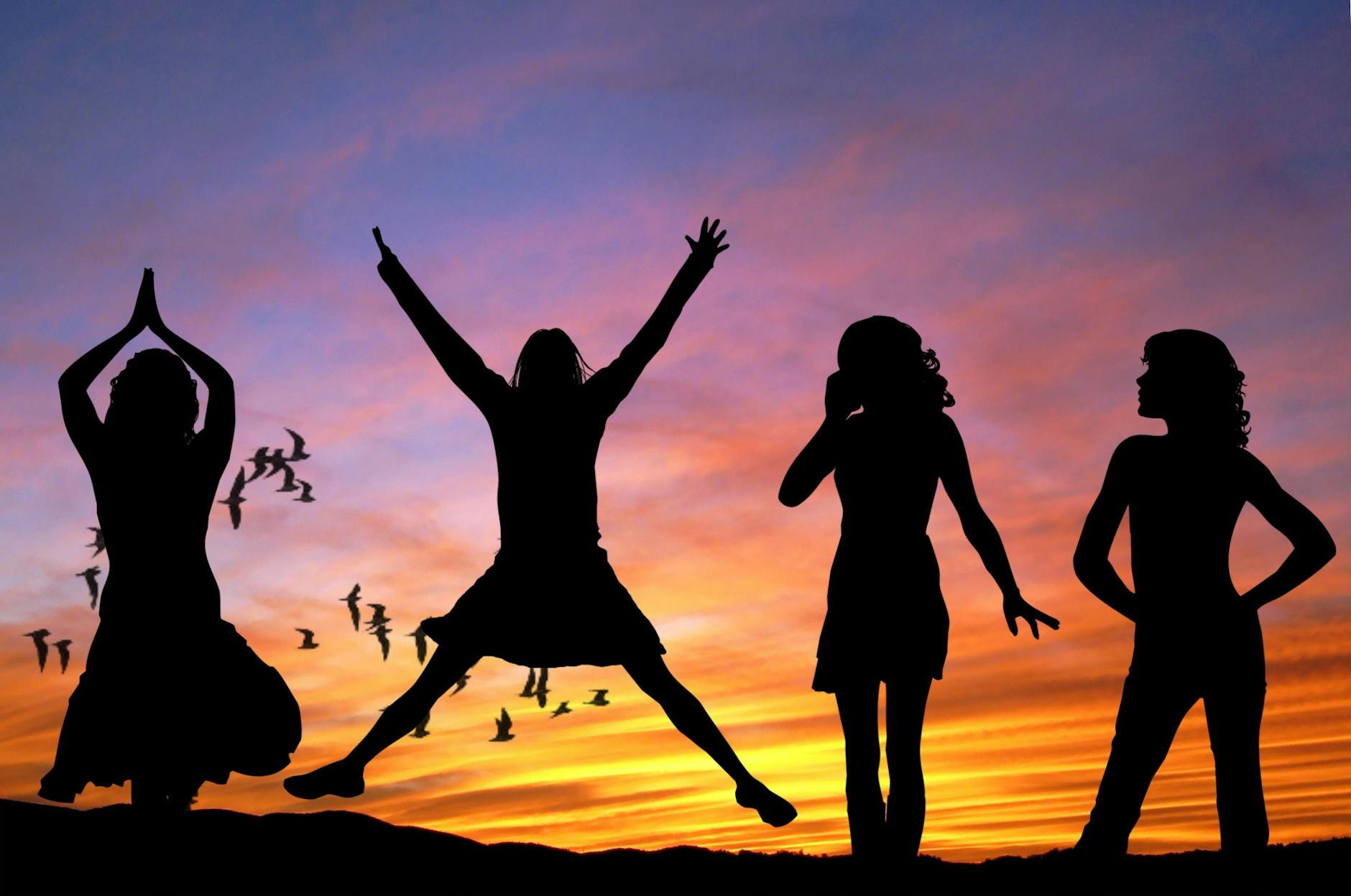
Art, music and all arts enrich life, and they’ve become tools we can all use for wellbeing – to lift mood and ease mental health issues. They open up fuller lives. March is Women’s History Month, and opening up fuller lives is just what women have fought to do for themselves. The arts can be a tool in that movement too.

Photo by Pixabay on Pexels.com

Art is joyful, fun, creative, liberating. So is music. So are all art forms.

Feminism can inform art and music. The arts can be used to express feelings of injustice, fear, low self esteem, and as lobbying tools to build awareness. Music and art and drama can become activism. This too can help wellbeing, since powerlessness only fuels anxiety and depression, while feeling empowered boosts mood and inspires hope. Through the years women have used music and art to express how they feel about being women – some sharing personal, individual experiences (think singer-songwriters) and sometimes wider and more political in tone.

But maybe the most positive sign is that women’s and men’s music and art now differ so little. Once women painters would paint only interiors, family scenes or still life – these were considered ladylike and polite. Now they are active across all styles. Installation art, public art, performance art and video – all are open to all. At a time when experimenting is most celebrated, women are just as experimental as men – think Tracey Emin, Rachel Whiteread, Lubaina Himid.

Craft and decorative arts were traditionally women’s pursuits. In many ways they still are, but this is developing. And these may be seen as “decorative”, but have for centuries been used themselves to lobby and call for change, as when quilting patterns were used within the abolition movement in the USA. Fashion design, where men traditionally dominated, has seen an influx of women. In music, women were once more likely to be seen as performers than composers or songwriters, but during the last century that has all changed. Women are still under-represented across music and drama in particular sectors, as conductors and directors. But the arts they produce are just as liberating, and liberated.

It is notable how participation in arts for wellbeing is still overwhelmingly female. In my art for wellbeing challenges, no more than 5% of participants are men, and I see this mirrored across the sector, where a majority of practitioners too are women, in visual arts, music and dance for wellbeing. Why is this? Is it the arts themselves that deter men, or the focus on wellbeing – when stigma about mental health is still higher in men? Yes, particular mental health issues may be more common in women – like phobias, extreme fear – but men too struggle with mental health in many different ways. Art and music might help.

Slowing Down

Mindfulness, relaxation, calm: the need to step back has become more and more common, as people react to the pace of life. Everything now moves at speed. With communication easier than ever, it feels like responses should be immediate, and the 24/7 news stream never shuts down. This has to contribute to nature’s importance in wellbeing. Nature’s pace is altogether different, and the more time you spend surrounded by nature, the more your perspective can change.

Photo by Joel Zar on Pexels.com

Nature moves at a pace that is slow but sure. Look at a tree or bush. Change is so very gradual through the year, as buds form weeks if not months before they open, leaves unfurl and live for further months, then tint and fall before the tree stands bare for the long months of winter. Conifer, evergreen trees have even less change to be seen, just a constant steady casting off of needles here and there. Trees look so solid and steadfast that they can feel reassuring. Or think about planting spring bulbs. Placing a bulb under the soil to sit out the winter, developing slowly, requires patience. If I plant a crocus in late summer, I might have more than six months to wait before the flower opens. Growing fruit trees or bushes is another slow activity. A new fruit tree or a grape vine can take years to reach maturity and produce edible fruits.

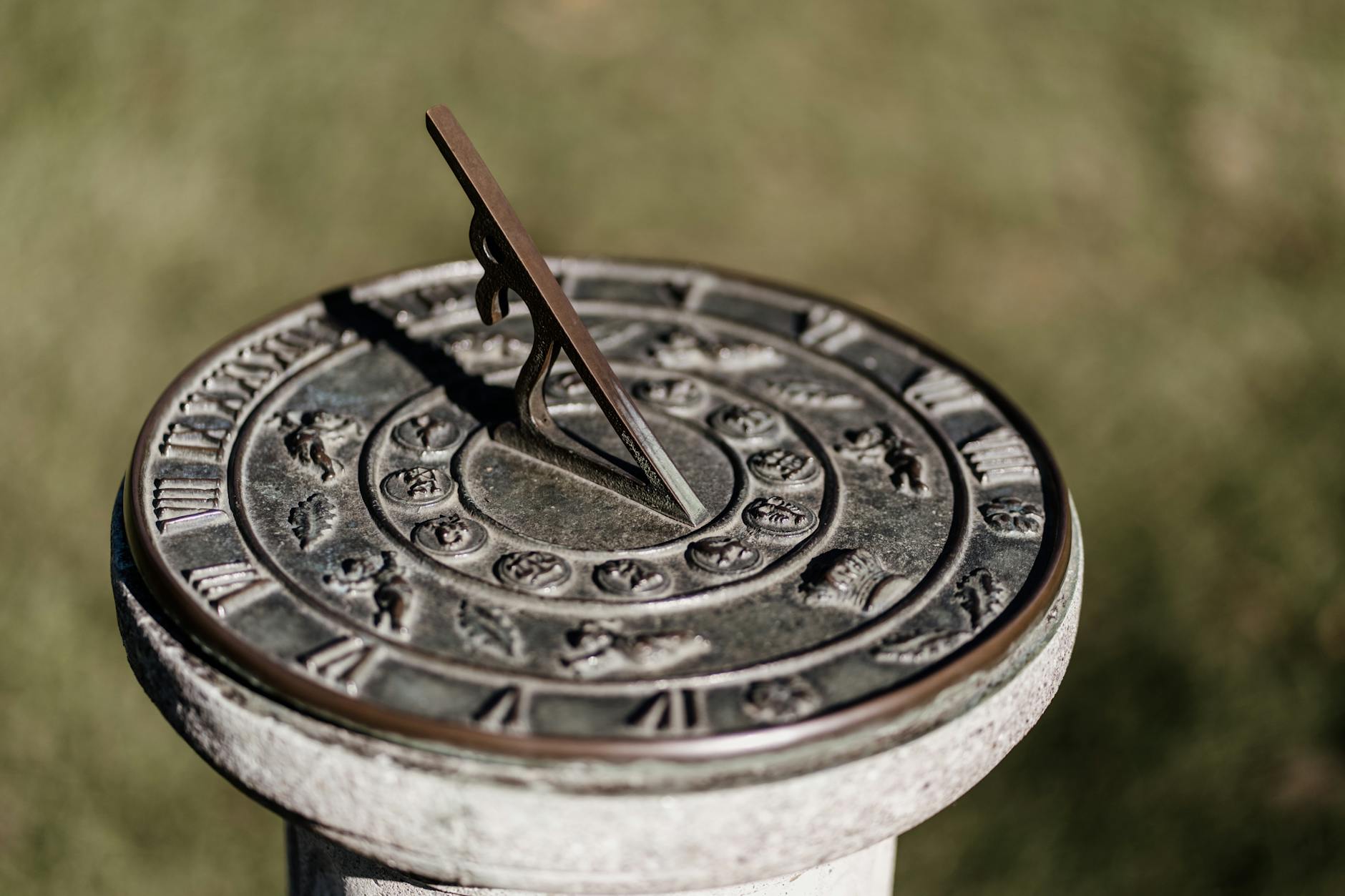
Seeing cows feed on hay in an outdoor pen over winter, or graze the fields in summer, or seeing sheep and alpacas graze a field day in, day out, can be an image of continuity and constancy, an existence that seems less complicated than our own. Using the sun to mark the passing of time through the day is another way to slow yourself down and live by nature’s timescale.

All this might feel unfamiliar, boring, frustrating. Being in nature might set you overthinking, which could be negative. Even your response to nature itself might take time and patience to develop. As you look out for different species – insects or birds – there’ll be more to notice and more slight but significant changes to observe. A tree might change only slowly in itself, but as an ecosystem and habitat, home to myriad creatures, it can look a lot more active.

Partly it’s nature’s sheer unfamiliarity that is making more people turn to the outdoors these days. Now that far more people live in towns and cities, time spent in the countryside or by the sea is a welcome contrast. Living in the countryside, it’s easy to take for granted quiet roads and wide open spaces – while living in the town, being surrounded by nature once in a while is a tonic.

The appeal of a slower pace of life has inspired slow radio and TV, where not a lot happens, and slow food – cooking from scratch with fresh local ingredients. Now that slowness has become rare, and speed is usually of the essence, living life slowly can be treasured once more.

How do you think nature’s slower pace can help wellbeing and calm us down? If you’d like to share, just go to Medley’s Facebook group https://www.facebook.com/groups/359291215486002

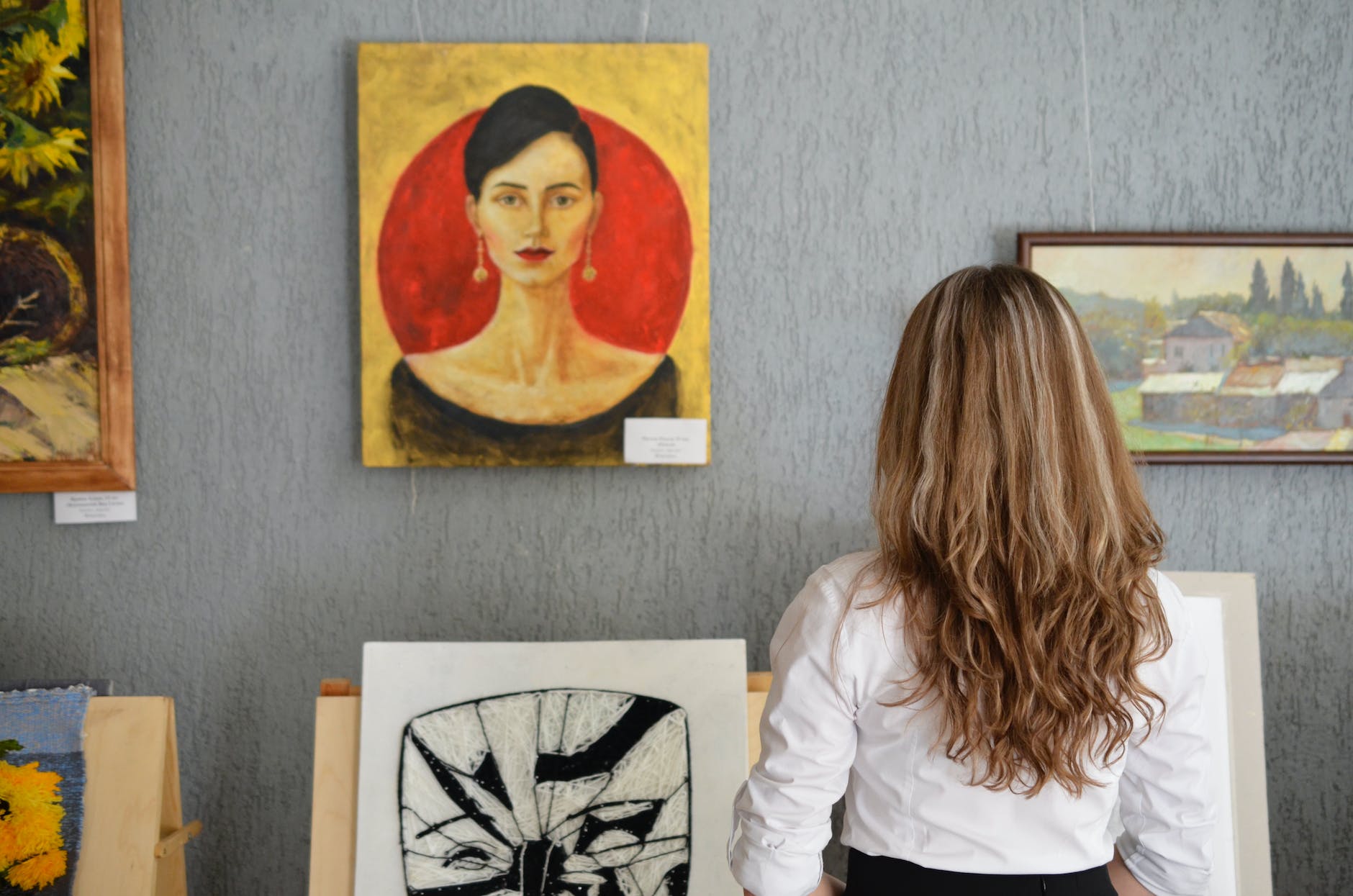
Talking About Art

In old age, the Impressionist painter Claude Monet dedicated himself almost entirely to painting water lilies. Depressed by bereavement, declining sight and the events of World War One, he was encouraged by the politician George Clemenceau to create a gallery lined with these paintings, in the Orangerie in Paris – as a space where people could contemplate, relax and reflect. Monet spent his life creating great art, but he clearly believed that looking at art too is time well spent.

Photo by Snow White on Pexels.com

Famous paintings can enrich life in so many different ways. Looking at a painting, learning a little about when or why it was painted, enjoying the colours, lines and style, can be a mental and visual stimulus to think about. Sometimes it can also be fun to try copying the picture or creating your own version of the artwork, interpreting it slightly differently. You notice a lot more about a painting if you do this, taking time to look closely and to work with the art.

But great art can also set you thinking and talking about your own life and experiences, about your wellbeing and mental health. Everyone will respond differently to any one painting, but most art throws up thoughts and ideas that are worth exploring. At the end of the day, art is all about life and the experience of living. So a portrait, a crowd scene, a landscape, a colourful abstract, all have something to say about what it is to be alive. How will you respond? This can open up new ways of thinking about your life and of exploring thoughts and feelings. You might prefer to reflect on a painting alone, or you might find it more helpful to think in a group, sharing with others and hearing how they react to the art. You might find common ground, or you might see things from someone else’s perspective.

Some famous paintings and sculptures feel particularly suited to expressing emotions. More modern and contemporary art can be more expressive. Take Picasso’s Weeping Woman, a dramatic painting that might set you thinking and talking about what may have distressed the sitter, and then what distresses you, or how crying makes you feel. Some Abstract Expressionist paintings use colour fields to explore how different shades of colour express mood. Edward Hopper’s paintings show city life as desolate and lonely.

However, I feel that almost any painting could spark off thinking and sharing. Seeing a place or a person or a scene through the painter’s eyes can crystallize how you feel about something, whether the scene is happy and carefree or sad, bare and disconsolate. Even a painting like a Cezanne still life, which might seem an unlikely fit, could make you think about celebrating the little everyday things in life, how there’s beauty in a bowl of apples or a vase of flowers that can raise the spirits.

Some museums and galleries now host wellbeing events and opportunities to talk about their paintings. But just looking at a painting in a book or online can open up helpful thoughts and conversations. This could also feel less direct than just opening up about your own issues straight away, which might feel too personal.

Do you have any thoughts? It would be great if you’d like to share – just go to Medley’s Facebook group https://www.facebook.com/groups/359291215486002 Thank you

Songs For Life

If you were to choose one song that is “your song”, what would it be? A song you remember hearing on a special occasion, or one you just couldn’t stop singing along to when you were young? A song you’ve loved for years, or a song you’ve only discovered lately? Maybe it would be a song that has grown on you over the years. Or maybe you would really struggle to name just one song, you enjoy so many.

Photo by Andrea Piacquadio on Pexels.com

Recently I heard about the Song For Life card. The idea is that everyone should have with them a card naming their song, so that if they were taken ill or in an accident, the song could be played to them. It’s gaining ground and more and more people are trying the idea. An idea that highlights music’s impact on us and how deeply interwoven it is with our identity as individuals. The hope is that hearing “your song” in adversity or emergency might console, uplift, calm or revive you. It draws on what we now know about music and memory, how music stays longest in the memory and can awaken a response when other ways fail. Music is so expressive that a single song can sum us up.

Limiting myself to just one song would be difficult. I like silence a lot of the time, but when I do listen to music, I like all different styles. Music is so powerful in creating a mood that different songs fit different needs and times. Songs can be nostalgic, in a happy or sad way. And over the years, my response to songs changes. Songs that I largely ignored when they came out in my teenage years, such as Blur, Oasis and Pulp, now feel really special. I might forget any song for years, then hear just the first few bars on the radio and it all floods back. And I might only enjoy one song by a particular singer. I’m no Robbie Williams fan, but his hit Angels is one of the most exuberant and magical songs I’ve ever heard. Another of my best-loved songs is Simon And Garfunkel’s Bridge Over Troubled Water, maybe the polar opposite of Angels, but no less memorable for all that. I also like carols and hymns: O little town of Bethlehem, It came upon the midnight clear, Amazing Grace, The servant king, Shine Jesus shine.

Then there are songs from the shows, musical theatre, which feel like the very essence of performance and melody, the way they combine with dance and drama. My Favourite Things (Sound Of Music), Somewhere Over The Rainbow (The Wizard of Oz), Can You Feel The Love Tonight (The Lion King), Memory (Cats)…I could go on. Opera and operetta open up another treasure trove, although less familiar. I do like Puccini’s O mio babbino caro.

Maybe you would choose one of these songs, perhaps something totally different. Now with ever more varied and endless playlists wherever you turn, choosing just one song to define you is more challenging than ever.

It’s interesting that you are supposed to choose a song, not a piece of instrumental music. Wherever music is used to boost wellbeing, singing is central. The power of lyrics and voice together with melody enable a song to express even more than instrumental music alone. And it can be easier to relate to a song, to hear your own experience or feeling reflected.

If you are to have a song card with you, you could name other loves, things that matter most – your football team, favourite animal, hobby or favourite colour. I guess the choice of a song card just shows how strong and unique an impact music has, one that might still spark some positive response when even football or crafting are out of reach.

Do you have any thoughts? Or maybe you’d like to share your song? It would be great if you’d like to share – just go to Medley’s Facebook group https://www.facebook.com/groups/359291215486002 Thank you

Figurative Vs. Abstract

Have you found that using different art styles has different impacts on mood and wellbeing, on mental health? Is drawing a figurative picture more stimulating than painting an abstract, absorbing your mind as you try to represent the subject? Is abstract art more calming and mindful to experiment with? One focus of my Arts Council England-funded development project, Paint Your Mind: Art As Tool, is comparing the mental health impacts of different art styles. So how might figurative and abstract differ?

Photo by Steve Johnson on Pexels.com

Figurative, or representational, art portrays a familiar or recogniseable subject. Pretty well all art was figurative before the late 19th or early 20th century, so it could also be called traditional art. Figurative art covers all genres, such as portraiture, still life, landscape and animal painting.

As you might imagine, defining abstract art is rather less predictable and more fluid. Overall, in abstract art, colour, light, line and form become more important than any specific subject matter. But within that there are different thoughts on what classes as abstract. Some believe only colour shapes and patterns class. Then there are paintings which take a figurative subject, only to distort it or use abstract, non-realist colours. What about art movements like Fauvism, Cubism or Dada? Are they truly abstract? Maybe only dripping or splashing paint on a canvas at random is the essence of abstraction.

At the end of the day, all art is about experimenting with colour and line to some degree. But however you might define figurative and abstract styles, they have their own parts to play in creativity. A lot depends on the individual. What is positive about abstract art for one person might be negative for another. Someone who has little confidence in drawing might find abstract art liberating but figurative art nerve-wracking or frustrating. I love drawing, but even so sometimes I prefer to try something experimental – choose a few colours and see what happens. That’s particularly in the evening when I’m tired. But this isn’t to downplay abstract art. In many ways it opens up more imaginative ways to be creative. Simply trying to reproduce a real-life subject might feel uninteresting, whereas creating an abstract image out of your own imagination might be more fulfilling.

Mental health impacts will obviously depend on the mental health issues themselves as well. Abstract art can be fantastic as a creative grounding tool for someone with panic or anxiety issues – creating a colourful pattern to release tension, or colouring geometric shapes as something very ordered and regular and calming. For someone struggling with trauma, guided figurative visualization could help express and think through feelings and responses. In depression, figurative art could open up more of a positive stimulus, easing overthinking as it becomes something specific to focus on – maybe going on to learn more about the subject matter, like a new wildlife species. But coloyr theory could make abstract art too helpful in depression – using bright colours to lift mood and energize.

In February, I’ll be running a new art for wellbeing challenge on this theme – alternating figurative and abstract art – with participants taking part from home in their own time. Starting on 1 February, All Change will run throughout the month. Every other day you’ll receive an art idea by email with example image – alternating between figurative and abstract styles. There’ll also be a private Facebook group where you can share how you get on with other participants (optional). At the end of the month I’ll ask participants which style and which ideas proved most positive. I’m looking forward to learning more!

To sign up go to https://www.eventbrite.co.uk/e/all-change-art-for-wellbeing-challenge-tickets-784434834707

Question Time

What is the best way to use art and creativity to help mental health? Is there even one best way, or are there many, each one as different as the individuals experiencing mental health issues? Is it best to focus on art expressing thoughts and feelings, maybe visualizing a scene or using colour to sum up how you feel? Is it best to try journaling, or to record mood, or sand play? Is it best to draw or paint something totally unconnected with these issues?

Photo by Vitu00f3ria Santos on Pexels.com

So many questions – and every single one opens up another. What about therapeutic models and techniques, such as the Feelings Wheel (used a lot now in schools) or the Therapeutic Spiral Model, used particularly with trauma? What about using famous paintings to open up conversations and reflections on mental health? How can the different arts interlink? How can art interplay with particular therapy and counselling models, such as person-centered therapy or CBT? And is using art specifically to improve mental health entirely different from using art for overall wellbeing? Might the two sometimes be closer than we think?

You might be wondering why I’m thinking about all this just now. I’ve been working as a freelance arts for wellbeing practitioner for over three years now, and I’m about to build on what I’m doing.

A new year can feel like a blank slate. That’s exciting, or daunting – or it might feel like just another day. I always like the idea of a fresh start, even if little changes. This year I am starting something new. I’ve been awarded funds by Arts Council England’s Developing Your Creative Practice Fund, and my development project – Paint Your Mind: Art As Tool – starts on 2 January. Over the next six months I’ll be listening, looking and learning, focusing on how art can help mental health specifically.

As part of this I’ll be running two art for wellbeing challenges, one in February and one in April. But I’ll also be researching how art is used for mental health, and asking for people’s views – participants and also practitioners and counsellors.

So I’ll be asking myself, and anyone who’ll listen, some or all of the questions here. I hope I’ll gain a more solid foundation for my future work. And I hope I’ll develop something new too, in response. Part of my time will be spent creating a body of new artwork to use or mental healtj, like a toolbox or toolkit. What would you create if you were trying to do just that? Probably everyone would go about this differently. I’m feeling my way, and one focus to start with will be comparing figurative and abstract art.

There are so many questions about how art helps mental health, but there are also many questions about mental health itself, and so many different issues and causes and impacts. What helps someone with OCD might be no help for someone with depression, and every person with OCD or depression will respond differently. Yes, it’s obvious, but it needs to be remembered.

Do you have any thoughts on any of these questions? Or maybe you have other questions of your own? It would be great if you’d like to share – just go to Medley’s Facebook group https://www.facebook.com/groups/359291215486002 Thank you. Or email me at medleymusicartnature@outlook.com