Release

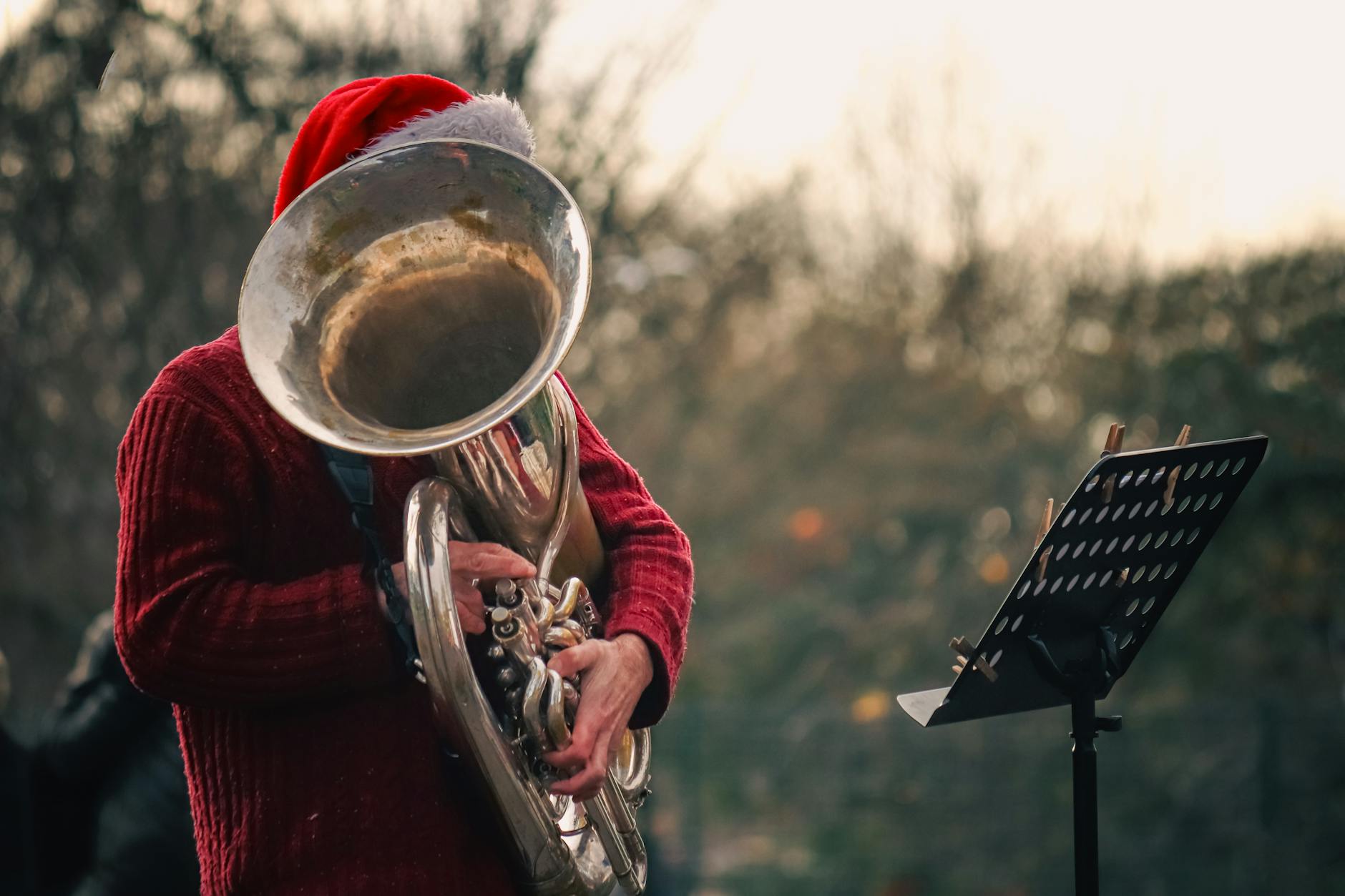
Yes, it’s starting to look – and sound – a lot like Christmas. To me, what sums up Christmas more than anything is festive music, however early it starts. Carols and classics like Fairytales of New York are on the radio, while in the shops, as someone quipped to me the other day, “Mariah Carey’s out of the box already”. Music we only hear for a few weeks each year, and music which I think lifts the spirits at a dark and cold time. Whether the wonder of O Holy Night or the calm of O Little Town Of Bethlehem, Christmas carols tell such joyful news of light and hope and new beginnings: news we all need. Christmas songs like Jingle Bells and Rudolph the Red Nosed Reindeer simply sparkle with fun, a sprinkling of stardust.

Photo by Boys in Bristol Photography on Pexels.com

“The function of music is to release us from the tyranny of…thought”. Those were the words of the famous conductor Thomas Beecham. Do you agree with him? Is thought a tyranny? I would guess that it is for most people at one time or another – overthinking the past, present or future, or all at once. Shutting those thoughts down and clearing your mind is not easy, and I know some people struggle all the more in silence. Music can balance thinking, or gradually alter your mood, or become a restful place to be, in the moment. The more ways there are now to stream music, the more people depend on sound to relax them, to wake them up, to cheer them.

What could be better proof of Thomas Beecham’s words? Given the choice, so many people prefer music to silence or background sounds, so many people want music as the soundtrack to their days.

I do wonder whether music stays as special and as positive or helpful when it becomes so constant? Might it just become another background to our lives? Might it become less of a “release”? Or on the other hand, could it gradually change the way we think altogether, so that thought becomes less of a tyranny in the first place?

I remember hearing that immunologists listened to music while developing the Covid vaccines. Apparently the music styles they chose depended a lot on their mood and progress. I wonder what song or piece of music heralded the final breakthrough?!

Music opens up another layer to life. It opens our minds to a different perspective, a different sound world. Think of it as moving from 2D to 3D. It lifts us out of the everyday. If I was to sum up music’s impact in three words, they would be “larger than life”. No wonder it’s probably the artform best known to boost wellbeing.

Any thoughts to share? Do contribute to the Medley Facebook group: https://www.facebook.com/groups/359291215486002

Reinventing Community

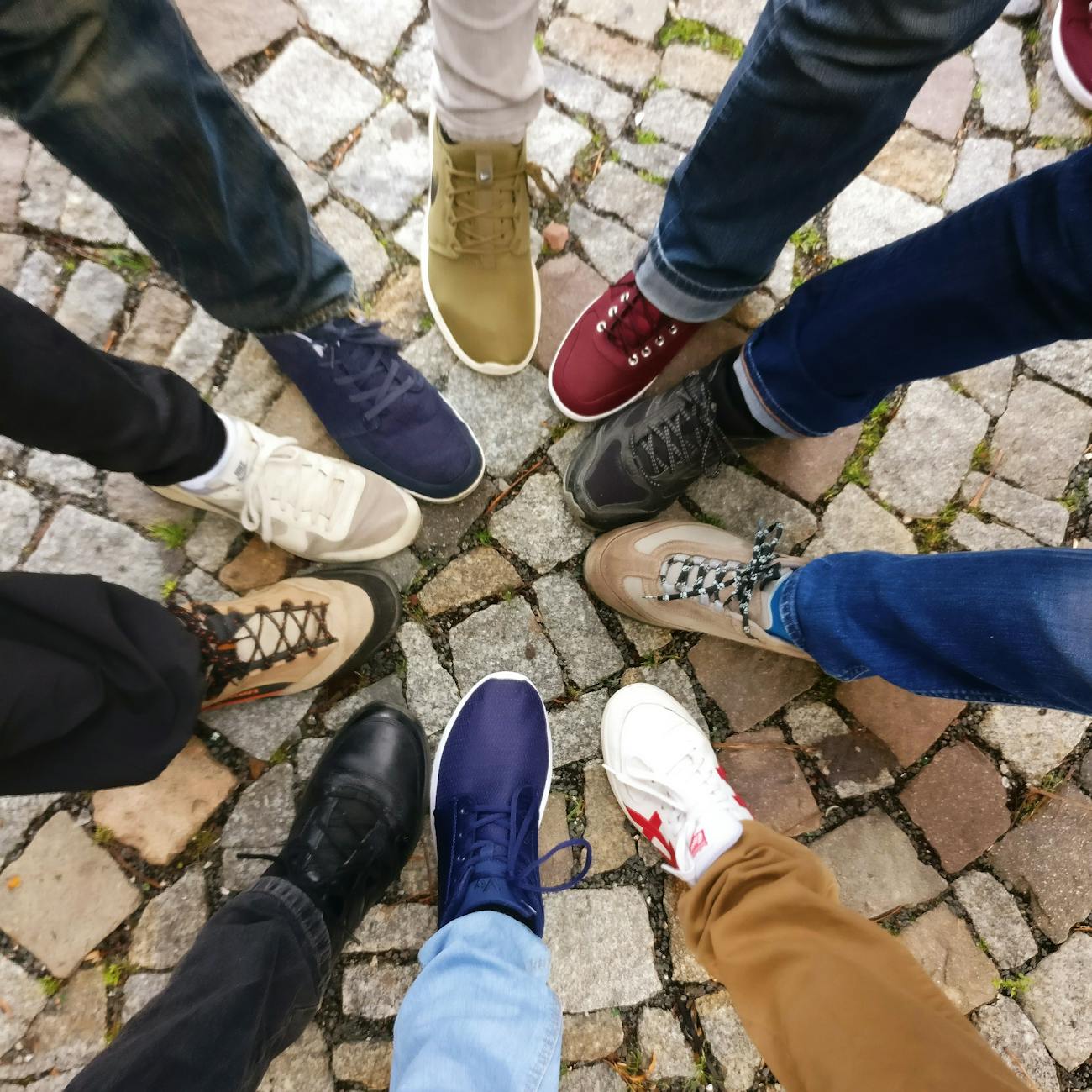
This week I saw images online of a wonderful creative display in a Midlands town to mark Remembrance Day. Local crafters came together to yarn bomb the high street, crocheting poppy themed toppers for the postboxes and making a large fabric collage scene as a wall hanging. Creativity at its best – enhancing the community while drawing people together.

Photo by Ingo Joseph on Pexels.com

So community is alive and well – and art & craft have a large contribution to make here.

What could be a clearer sign of ageing than starting to compare life now with life back in the day?! I may be only just into middle age, but it’s happening already. And what stands out is the loss of so many amenities central to local communities. When I was a child during the 1980s, village shops and pubs were a given. So too were milkmen, fairly regular buses and a mobile library. Towns would have a wide variety of shops and banks. Village shops were the first to go – many closed during the 90s, being converted to houses. On into the new millenium, the loss of amenities has been gradual but relentless, and only accelerated by Covid. So it is that by 2024, it’s rare for a village to have a shop, or for a town to have any banks or a dedicated post office. Village and town pubs alike close all the time, local garages or petrol stations shut and are not replaced. Town centres struggle to fill shop units. Many villages have no scheduled buses, only perhaps a shuttle bus to book ahead.

Obviously community is not dependent on shops, pubs or any businesses. Community happens in all different ways. But local businesses were still far more than somewhere to buy bread or have a drink. They brought life and purpose to an area. Losing local amenities can be inconvenient but it can also be dispiriting and isolating, wherever you are.

Now new ways of being a community are emerging. The UK has 150 community-owned pubs, many of which also open as community shops and post offices. Community energy has for years enabled growing use of renewables in remoter areas most of all, and community land trusts have led the way with this and other initiatives in Scotland. Maybe these newer ideas will prove all the better.

Creativity too has a lot more to give.

Yarn bombing has only burst out of the shadows in the last few years – could it be a reaction to all that’s been lost? Decorating our streets has become ever more commonplace. Whether done by an individual or a group, yarn bombing is just a fantastic, colourful and imaginative way to brighten the everyday, and it’s a local talking point. As chain stores and individual shops alike close in towns and cities, leaving many shop units deserted, creativity could help. Displaying art and craft in empty shop windows or inviting groups to paint murals on the glass. Hosting pop up art or craft workshops in the unit, or a pottery painting cafe, or a repair cafe. Some places have already experimented with ideas like these. But community can start small too, with a single creative act. Making a Christmas card for a local care home is an idea I’m encouraging this year. Let me know if you give it a go. Creativity has “community” written all over it. Community looks very different now, but creativity is one way to reinvent how it might work. Do you agree? Have your say at https://www.facebook.com/groups/359291215486002

Christmas Greetings

What do you think is the most overshadowed way art and creativity can help mental health & wellbeing? The more I’ve led and learned, the more I feel that making art or craft to share and give away needs to be promoted. Yes, a lot of this happens, but more publicity and cooperation would encourage more of us to have a go, more of the time.

That’s why I’m starting a new initiative, the Make To Give Challenge.

Photo by George Dolgikh on Pexels.com

When I was wondering what to call this new initiative, I considered all different possibilities, all to do with sharing, connecting, community and making a difference. In the end I settled on Make To Give as something clear that sums up what it’s all about. Spend a little of your time making (a card, a decoration, a picture) then give away what you make, as a random act of kindness. The logo shows hands, because hands make and give.

The Challenge’s first callout is for this Christmas, asking people to make just one Christmas card or decoration and give it away to a care home, a support group or befriending organisation. And tell everyone about the Challenge to help it grow!

Why then do I think making to give is so beneficial and so overshadowed? Well, it doubles the benefits. Not only I the maker being creative (which is known to calm, lift mood and boost imagination) but they’re also more likely to feel fulfilled as giving away what they make adds a sense of purpose and connection. Diverse studies have shown that helping others can help us too, easing stress and overthinking and changing perspectives for a little while. The power of connecting in community is well known too, while the perils of isolation and loneliness weaken physical and mental health. So connecting through creativity is a gift that will go on giving.

Moreover, it should help recipients’ wellbeing too. Being given a handmade card or other item is stimulating, sharing colour and image, and can make people feel remembered and part of a community, all the more when it’s made by a stranger. It’s nice to know that somebody you don’t even know took the trouble to create something for you to enjoy. It would also be good if likely recipients wanted to have a go at making and giving themselves – for example, care home residents could make a card to give to another local care home. Completing the circle, and doubling the benefits once more.

And why do I feel it’s overshadowed? Art for wellbeing takes many forms, but expressing thoughts and feelings is sometimes prioritised (as in journaling). Or using creativity to calm down, maybe drawing abstract patterns or colouring in. Even where people do give away what they make, it’s not easy to find out about opportunities, and there’s no central network or organisation.

I hope the Make To Give Challenge will continue beyond Christmas, with two or three callouts through the year, on different themes. And I have ideas for other ways it could grow and expand too. But it all depends on you and others like you having a go. Do let me know if you take part: use the contact form here https://medley.live/contact or post your creations on social media tagged #maketogivechallenge

It may seem a simple idea, but it’s also a practical, tangible way to connect through creativity.

A New Stigma

Sometimes I wonder which is truly more beneficial for wellbeing: creativity that expresses and explores thoughts & feelings directly, or that highlights something totally different? Is creativity most helpful as a tool or as a haven? This could apply to visual arts, music, dance or drama. Should they help shut out the darkness or delve into its midst?

Photo by Andrea Piacquadio on Pexels.com

As mental health has emerged out of the shadows in recent years, stigma has gone away – or has it? I’ve started to think that it has merely changed. Where once people were afraid to admit to mental health struggles, now we talk more openly, but the response may still be negative. More and more, the media & individuals have started to raise doubts about the “mental health epidemic”. Debate is raging in some quarters. Surging rates of anxiety and depression in young people have led to Gen Z being labelled snowflakes, and the media questioning why so many struggle with school and university attendance or in-person working. Across age groups, those on long term sick leave is at a record high in “Sicknote Britain”. Different ideas get explored. There’s prevalence inflation, the theory that the more people talk about mental health, the more they assume they themselves have mental health issues. There’s research into how contagious mental health issues can be – are you more likely to experience low mood if people around you do? And then there’s controversy around resilience and coping strategies.

Yes, these debates have a place in any truly open exploration of mental health. But it’s a balancing act for they can be profoundly damaging. They are becoming the new stigma. Generalisations damage too, yet working to explore and unravel some of the root causes of surging problems is a more practical way ahead. Is 21st century living to blame – loss of community, high costs of living, climate emergency? What about the impacts of so much violence and horror in entertainment, gaming, film? Or lower levels of religious faith? To what degree should we look at social determinants of mental health as opposed to the personal?

To encourage us all to unpack how we feel and why demands as many tools as possible, and this is one place where the arts have an important part to play. In visual arts, visualization, symbol and colour can all help. Visualization thinks through how you respond to a particular situation or event and considers how that might change. Using art to visualize helps you spend longer on thinking things through, taking time to reflect and dig deeper – and if drawing is not for you, you can use stick figures, symbols, assemblage or scrapbooking. Or where anxiety is rooted in fear for the future, using art as activism can help express but also empower – maybe upcycling or crafting posters and banners.

Dismissing or doubting mental health issues still threatens progress. Doing something active to understand what is happening in everyday lived experience is vital. And all artforms can add a layer to that quest. But the arts do also boost wellbeing in other, less direct ways. Painting the beauties of autumn may not unearth how you feel but it will rest and recharge. I think we need to balance the two – and that treating the arts as an escape or haven is not about jollying someone along or distracting them, but has real benefits.

The very use of arts for wellbeing and creative health are interlinked with today’s more open attitudes to mental health. They have such a lot to give in diverse ways, and all this too must not be lost or undermined. Centering the debate more on practical ways to address mental health is one way to move ahead.

Do share what you think, in Medley’s Facebook group: https://www.facebook.com/groups/359291215486002

Growing Old Creatively

Living in the moment can be one of the arts’ best gifts, lifting us out of the everyday and out of the wider picture. Maybe this is all the more important in older age, opening up space to imagine, to enjoy, to create, to produce or just to be.

Photo by MART PRODUCTION on Pexels.com

Silver Sunday ( the first Sunday in October) has now run for several years and this year it’s part of Age UK for the first time. By inspiring individuals and organizations to arrange events for older people and creating a space to publicize and share these events, it’s a celebration of enjoying later life, and a practical, tangible way to build community. Looking through the Silver Sunday website (https://silversunday.org.uk) there’s such a variety of indoor, outdoor and remote events, whether eating and drinking, sports, music, dance, social get togethers, or art and craft. Events may be held in community centres, parks, care homes, online, anywhere at all.

As “creative health” continues to expand, a lot is happening to draw in older people. Think CADA (the Creative Ageing Development Agency), Arts 4 Dementia, the National Day Of Arts In Care Homes and the Family Arts Campaign’s Age-Friendly Standards. More and more, co-creation is central – ensuring that older people themselves shape arts for wellbeing, sharing their lived experience and what works for them, allowing creative health to be genuine and to reflect older people’s priorities.

Why should arts for wellbeing look any different for older people, you might ask. And it’s obviously true that wellbeing is wellbeing at any age, with arts and creativity boosting confidence, purpose, concentration and community. Yet highlighting co-creation can help root out generalisation and recognise the diversity of tastes, preferences and needs. It might show older people want to go on experimenting, or it might place value on the constancy that arts can represent at a time when a lot is slipping away from people’s grasp.

When I surveyed people about arts in older age, 71% felt that older people are less willing than other age groups to talk openly about mental health. This persisting stigma or embarrassment may reduce participation in arts for wellbeing or make older people less happy to use art to express thoughts and feelings directly. But there are so many other ways the arts can help, with easing boredom and loneliness & giving purpose the most positive impacts cited by those surveyed. Expressive art is part of creative health, but only a part.

One way I think art and craft could particularly enrich older people’s lives would see older people making things to give to others (of any age) – maybe rock art to display locally, or handmade cards for patients at a local hospital or hospice. Giving, not always receiving – being in a position to brighten someone else’s life, not always the beneficiary. Using shared art to boost wellbeing is important and sometimes overshadowed. So I’m just starting the Make To Give Challenge to encourage this (https://medley.live/make-to-give)

Practicalities can also impact on arts for wellbeing for older people, with issues such as sight or hearing loss, dementia or declining motor skills (more common in older age) requiring different approaches. Drawing on a tablet can enable stroke survivors to go on creating, turning to abstract art may prolong creativity for people with sight loss, and an older person with dementia is more likely to respond to music they first heard during their teens or twenties (the “musical memory bump years”) than to more recent songs.

It’s all about discovering what works. And Silver Sunday can be a fantastic way to get started!

A New Beginning

A fresh start, a time to recommit and throw yourself back into life, or a dreary slide towards winter? How do you see this time of year? Long into adulthood, autumn still has that “back to school” feeling – for good or ill! Summer’s still seen as carefree time in the sun, while autumn is more about getting on with things. January is traditionally the month for New Year resolutions, but I think autumn too can inspire resolutions and change.

Photo by Chelsi Peter on Pexels.com

Imagine this as cutting back the summer’s growth in the garden, digging over and clearing the ground so you can sow and plant. Wellbeing too can benefit from change, even small changes and new stimulus. Art, craft, entertainment, music or sport can all open up fresh stimulus within the everyday, and as an arts for wellbeing practitioner, I see and know how being creative using visual arts lifts mood and enriches life. But sometimes I hear from people who want or need to explore how they feel more directly, and open a door to holistic change. That’s what brought me to life coaching.

Life coaching has grown and grown over recent years, with many different niches – there’s confidence coaching, wellness coaching, sober coaching and personal coaching to name but a few. The focus throughout is encouraging and supporting the person (or client) to think about how they live, to question and reflect and explore, and to set goals that can help move things forward. It’s an empowering approach for the individual: rather than being told or led, they have the space and time to think for themselves and carve out a way ahead, with the guidance of a life coach.

Within day to day living, there’s rarely time to reflect on what matters most to you (your core values) or what really stops you doing things or changing things. It’s usually sidelined and overshadowed by simply getting by. Let alone going on to consider how your values might help you with positive change and fulfilment, or how you might lessen the hold negative thoughts have over you.

“Outcomes” and “goals” can feel vague, dreamy, unlikely, fantastical. Life coaching aims to change that, to set honest and practicable goals that give purpose but don’t overwhelm.

I’m someone who enjoys planning. I’m always writing “to-do” lists, for the day, the week, the month ahead. Sometimes I spend longer writing the lists than getting on with the tasks on them! But they help clear my mind, set out what I need to do and break down those tasks into tangible steps. That’s a little like setting goals in life coaching. Time management itself can be a limiting issue, if you feel you don’t have time to make changes. By setting small and gradual goals, change becomes more manageable. I compare this with art for wellbeing. There’s no need to spend ages on creativity. Even a quarter of an hour can be worthwhile, doing a quick drawing or colouring a pattern, opening up a creative refuge within a busy day. You’re more likely to stick at anything if it fits into your life, and if you struggle to concentrate then shorter bursts of activity are also more practical. Life coaching too can set those short tangible goals that fit into the time or (head) space you have.

If you are a woman interested to consider how life coaching might help, have a look at https://medley.live/life-coaching and think how this autumn could clear new ground for you.

Sketching Nature

On the very first day of meteorological autumn, as it is now called, I saw a cranefly – or daddy long legs – bumbling along the back wall of my house, up and down and across. Always a sign that autumn is on its way, and a sighting I’ll record on a page in my nature journal for the year.

Photo by Dom J on Pexels.com

Wellbeing is central to nature journaling. At first glance, keeping a nature journal might seem simply another hobby or pastime, and that’s all it needs to be. But it can also enrich your experience of the world around you. It adds purpose to a walk or outing, makes sightings more memorable, and relaxes & calms you as you slow down to spot little changes and to look more closely at what you see.

Journaling overall divides opinion. Many people are dedicated to journaling, creating diverse designs and clour themes, and using a journal as a wellbeing tool. It becomes a creative outket in the day, a regular refuge, combining word and image, so it’s varied and flexible. As somewhere to vent, to express thoughts and feelings & to record mood and/or health day by day, a journal becomes a safe space and an opportunity to let off steam and think and explore. But for other people, journaling itself can be negative. They may feel it’s a commitment that becomes oppressive, another stress in their everyday lives. Or they find journaling fuels overthinking, encouraging them to dwell on thoughts and feelings that may be negative and unhelpful, and to spend time focusing on mood.

Nature journaling counterbalances this. It takes the positives of journaling – creativity, self-expression, a space to record what’s happening around you – but looks outwards, changing the perspective. Rather than mood tracking, noting appointments or reflecting how you feel, in nature journaling you record what you see or hear around you in the natural world. That might be something simple, like leaves falling in autumn, a sparrow pecking crumbs in the street, or the weather. There’ll usually be something to record, whether you live in an urban or a rural area. You can also create nature journal pages that are more about memory (what you’ve seen in the past and like to remember), imagination (picture a dream garden or walk), or knowledge (record what you know will be happening in nature at this time of year, even if you haven’t seen it first hand). I like to record within a short distance of home, my regular “patch” where I walk a lot. But sometimes I’ll also record news items about nature, like reports this summer of very few wasps. This year I’ve created a nature journal page each month, and enjoyed choosing what to include. I usually draw or paint about six or seven sightings for the month, and add a few words to explain each one. You could use photography, pressed leaves or flowers or bark rubbings too.

Now for autumn I’m preparing to run an art for wellbeing challenge called An Autumn Sketchbook: Nature Journaling For Wellbeing. Autumn can be bittersweet as winter nears, but it’s a beautiful season in itself. An Autumn Sketchbook will be a flexible art challenge, to try from home in your own time. Starting on 28 September and running for a month, every other day you’ll receive a different nature journaling idea by email, together with an example image. There will also be a private Facebook group where participants can share art and see how others get on with the ideas too.

To take part, go to https://www.eventbrite.co.uk/e/an-autumn-sketchbook-nature-journaling-for-wellbeing-tickets-968154966567

Up Country

Country music is enjoying an upsurge. Whether it be Dolly Parton, whose fame only continues to grow in her 70s, or younger stars such as Taylor Swift and Beyonce, whose Texas Hold-‘Em recently became a record-breaking hit, country is winning over more fans than ever. Why is this? Streaming is known to have widened musical tastes by making it easier to experiment and explore different styles and singers with a single tap or click. But maybe country’s also found to be positive for wellbeing?

Photo by Pixabay on Pexels.com

A lively rhythm, lyrics that draw you in, music legends who have come to embody the genre – just some of country’s strengths. As in so many music genres over the last century, country uses a lot of syncopation (where the note is played before the beat). I thought how hearing a country song makes me feel. It’s warming, life-affirming, energising, with a strong onward movement. Good music to motivate or to lift mood. And it never shies away from the darker, sadder or messier side of life. It’s down to earth – think Lynn Anderson’s Rose Garden, singing how the sun can’t shine all the time, rain has to fall…An openness that feels like empathy with whatever the hearer might be going through. Country understands and has been there before you.

Country music has its roots in the southern states of the USA in the 1920s. No wonder that Tennessee alone is still the very nerve centre of the genre, with Dollywood the state’s most visited attraction, and Nashville a magnet for country music fans from across the globe. So famed is Nashville as the home of country that it has its own Walk Of Fame.

So country music is also deep rooted within the country itself, expressive of home. Dolly Parton is not alone in singing of Tennessee. So many other music styles have strong US ties, but maybe none quite so strong nor so personal as country and western as it used to be called, remembering days gone by. That a pop star like Beyonce should now move into country signals it wide appeal. She’s brought country to new audiences and proved that genre is no barrier. She isn’t the only one. More and more, music is blurring traditional distinctions. It’s all about sound, whatever the genre. The BBC Proms alone have contributed by introducing different styles over recent years, this time featuring a disco themed dance night at the Roya Albert Hall. Not everyone agrees I know, but I feel this can only be good news, throwing open the joy of all music to everyone.

But back to country. Most – maybe all – moods will find a country song to fit. Country music is all about your and my experience of life, somehow, so we hear an echo of how we feel. Sometimes it also paints a picture in sound, a scene of the American south and west, of daring and adventure and horseback rides. So it opens up different and familiar worlds alike to imagine, and that alone helps raise spirits. Hear a country song today and see what you think.

It would be good if you’d like to share experiences or thoughts in Medley’s Facebook group https://www.facebook.com/groups/359291215486002 – thank you.

Nature’s Soundscape

Hearing sounds of the natural world can become everyday and something I take for granted. Wind rustling through tree leaves, a blackbird singing, bees buzzing, water trickling over stones. There are apps now to identify pretty well any natural sound. In some ways they make us listen out more, then learn what’s in our midst. In another way I think they can take the fun out of discovering nature for yourself. But however you listen or learn, biophony (nature’s soundscape) is so important as a background to our lives and wellbeing. When – as today, with the General Election underway – the world’s chatter seems deafening, biophony can be a refreshing moment away.

Photo by Leo Wang on Pexels.com

One folk musician, Miranda Rutter, has recently celebrated birdsong by composing a new album, Bird Tunes, inspired by snatches of birdsong she recorded on her phone during walks in the woods. She has now also performed pieces from the album on a concert tour together with a concertina player, Rob Harbron.

Fiddle and viola are Miranda’s instruments, and she performs, composes and teaches. Learning that she tutors the National Youth Folk Ensemble and undergraduates on Newcastle University’s folk music degree course showed me just how thriving folk music is these days – I’d no idea there were degrees in folk. Miranda also performs with a string quartet called Methera – a string quartet playing folk, rather than the more usual classical for this form of ensemble.

Hearing music like Miranda Rutter’s album, which builds on natural sounds, adds new layers to how we experience the natural world, enriching our listening. It also got me to think about other, less celebrated natural sounds. Birdsong is widely recognised as calming, mindful and restful. And there are so many other creatures out there making their own soundscape, as well as plants and trees that create sound as the wind blows over their foliage or seedheads (think rushes, conifers, willows or honesty). Music drawing on more of these different sounds would help focus our listening. Ralph Vaughan Williams composed the famous piece The Wasps, and other insects could also inspire music – think bees buzzing, crickets in the grass, a moth’s wings beating on glass.

Silence can be the most mindful and calming “sound” of all, but it can be too intense, inviting too many lurking fears, thoughts or sadnesses to creep in. Instead, a perfect counterbalance can be listening to quiet natural sounds, in person or online now that there’s a lot of choice out there to add to your playlist. Sounds in nature aren’t usually constant or overwhelming, but diverse and ever-changing. Listening to them can help your mind drift but stay focused too – the essence of mindfulness.

To learn more about Miranda Rutter go to https://mirandarutter.com . And search online for natural sound recordings, experiment with what you listen to and how it impacts your mood.

Overlooked

Outside my window as I write this is a small patch of grass – maybe 2 metres by 1 – where I have let the grass grow longer to see what else might appear. There’s some dove’s foot cranesbill with its little purple flowers, there are some daisies and dandelions, and a few Timothy and meadow grasses. It’s nothing spectacular, but in the sunshine it’s nature in microcosm.

Photo by Pixabay on Pexels.com

Thinking about nature on a small scale, and focusing on the little details – I feel this is one good way nature can boost wellbeing day by day. It’s easy to walk on by and overlook the small things – but it’s taking a moment just to stop and wonder that adds something to the day.

Recently I’ve heard about two new books which celebrate the small and the particular in different ways. One is “Understorey” by Anna Chapman Parker, about the writer’s year-long quest to record and draw all the weeds she sees. As someone ever on the lookout for another creative challenge, I like the idea of illustrating the weeds, not just noticing them. It’s also interesting how Anna Chapman Parker explores her search’s impact on wellbeing, lessening her migraines and giving a feeling of calm and hope. Weeds may be less striking and colourful than garden flowers, easily overlooked or trampled underfoot, and unwelcome in our gardens and driveways. But even as I clear ivy-leaved toadflax from my driveway, I still admire its delicate lilac flowers and creeping stems.

The other book is “Hedgelands” by Christopher Hart, an exploration of hedges and their importance as an ecosystem. Hedges might not seem so small or particular. They cover hundreds of thousands of miles of countryside after all, even though that figure has declined enormously. But every single hedge is individual after all. The book considers how hedges have changed down the years and the different plants that can form a hedge. All this spurs me to look more closely at any and every hedge that I see. It might be my own hawthorn and leyland hedges as I tidy them through the summer. Or it might be the hedges I see as I walk around, on the edges of gardens and fields. Just looking at them, identifying what plants grow there, hoping to see any of the birds or insects which depend on hedgerows. Seeing something like the first dog roses in summer is a small thing , but it can open up a moment out of the daily round to look and to be. I stopped on a verge the other day to look at a dog rose, to count its petals and see its yellow stamens. A passing driver probably wondered what on earth I was doing, but who cares?

The hedge is a world all its own – imagine how vast to an ant, a beetle, a shrew, a dunnock. Think about that, and let our world recede, just for a moment.