
Why do children play? What drives that instinct? How do we know that a baby, a toddler, a child, will want to play? And equally, why do we presume that adults grow out of that playfulness?
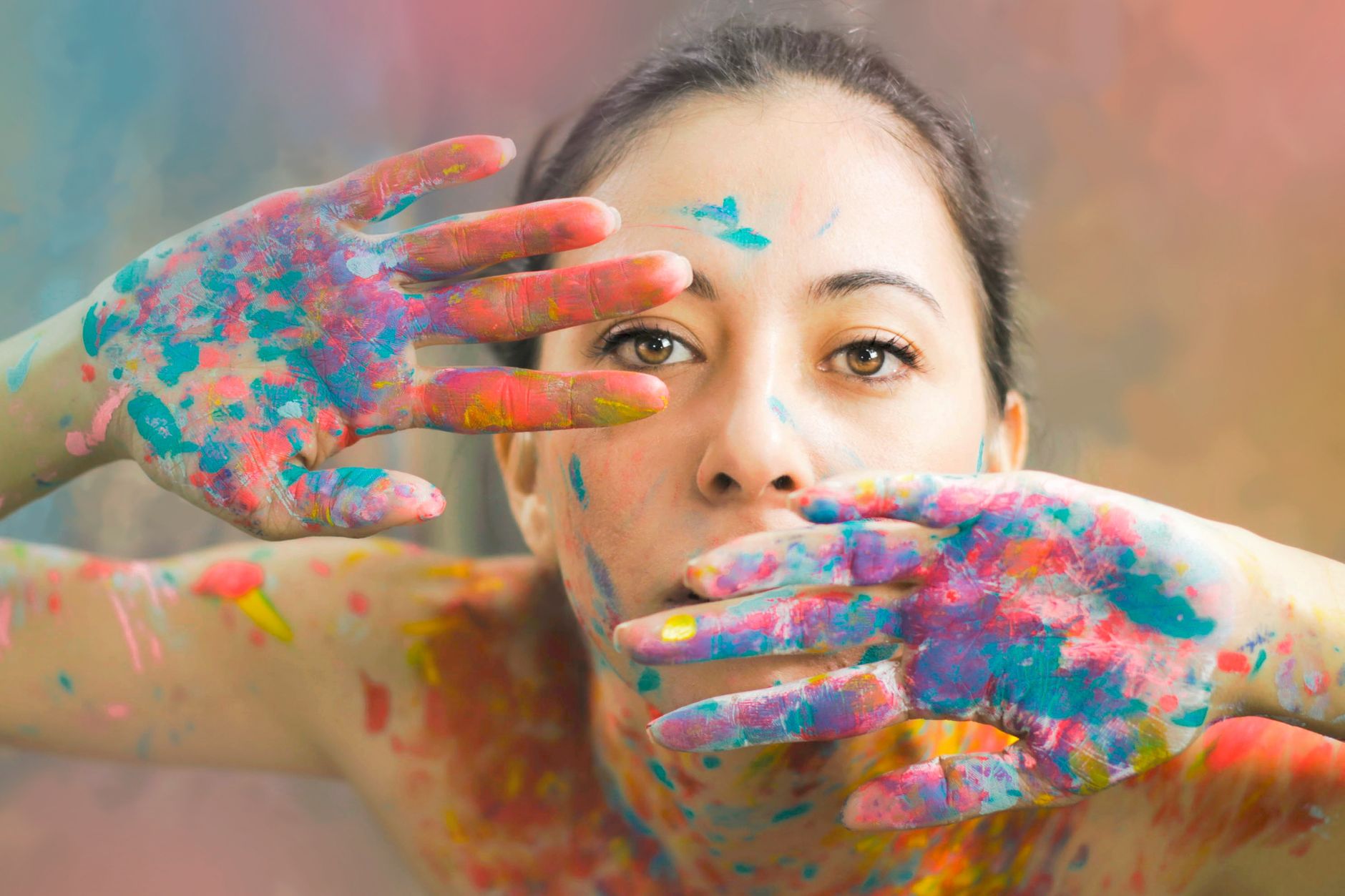
At its heart, play is about experiencing the world, experimenting with living, even inhabiting different realities and different personas through role play, make, believe and pretend. Children dressing up, playing shop, or giving their dolls or teddies names and fully formed personalities. Play can allow their imaginations to develop and become a safe space for them to visualise what it is like to live in the world as an adult, to work and make choices. Play can also have a therapeutic role as early as childhood – play therapy developed to help enable children to express thoughts and feelings in more creative ways that don’t depend on words and language. But there’s no need for this to stop with childhood. Even as we develop our use of language and widen our vocabulary in adulthood, sometimes images and symbols and colors can still feel more expressive.
Play is not just for children. Look at the events and entertainments that enrich our adult lives. Sports tournaments, theatre, film, TV, music, stand up. They’re all serious pursuits and huge industries. But central to them, there’s an element of play. Top athletics events have their roots in a crowd of children running an egg and spoon race. Even serious drama has at its core the outlet of dressing up and pretending to be someone you’re not, playing at telling a story. We enjoy sports and showbusiness as adults, partly for the way they reignite in us that spark of playfulness.
Playfulness that’s not only about fun and laughter, fooling around and messing about, but also about expressing ourselves and who we are, and making sense of what it is to be human. For many of us as adults, it’s something we watch and enjoy as spectators. But playing actively, as participants, has a lot to contribute to. Changing perspective, focusing, absorbing, lifting mood, being creative or productive.
That’s why I feel that play should be central to enhancing well-being and exploring issues that cloud our mental health in adults too. And the visual arts in particular are a very inclusive and flexible way for people to experiment with play, as they use colour, image, shape, words and crafts. And that’s why I’m holding a training workshop on Zoom on 15th October that’s called Pens, Paper and Play. It’s a participatory workshop and an opportunity to explore some creative activity ideas that may be helpful in different settings and issues. To learn more and to book your place, just have a look at https://www.eventbrite.co.uk/e/pens-paper-play-a-training-workshop-tickets-2000147851065

