In its essence, art is all about the moment the pencil, pen or brush makes contact with the paper or canvas, and what happens there. Paul Klee famously compared art to taking a line for a walk. Is that what matters most? Is it art’s main purpose, creating any line at all (or pattern or image) where before there was only space? Is it even important what that line, pattern or image looks like, or not?
The Big Draw, a wonderful organisation that promotes and shares the power of art and creativity, has a different theme each year for its Festival, and this year’s theme is Make A Mark. It’s a chance to focus on creating as an activity in itself, and it encourages people, groups and schools to hold events that encourage experimenting, playing around with art, thinking about different styles and creating without limits. I’m running a Zoom workshop on Saturday 11 April called Make A Mark – a relaxing time to draw in different, unexpected ways (https://www.thebigdraw.org/events/make-a-mark-zoom-workshop ) It’s a theme I probably wouldn’t have thought to choose for a workshop, but The Big Draw Festival theme set me thinking! I do enjoy experimenting more as I share art for wellbeing with others, discovering how fun and absorbing it can be to let go and forget about being exact or predictable.
Experimenting can stand alone. Or it can be particularly helpful where people are hesitant or wary, where they may not have confidence in their own ability or are simply not used to doing anything creative. Where the very word “drawing” can make some people panic, mark-making and experimenting with different approaches can be more positive and attractive. Sometimes it can be a “way in” to art. Occasionally I’ve used quick experimental ideas as a warm-up exercise at the start of a group. But sometimes it’s also something experienced artists turn to for a change or to rediscover their joy in art. Or it may form the foundation of their practice.
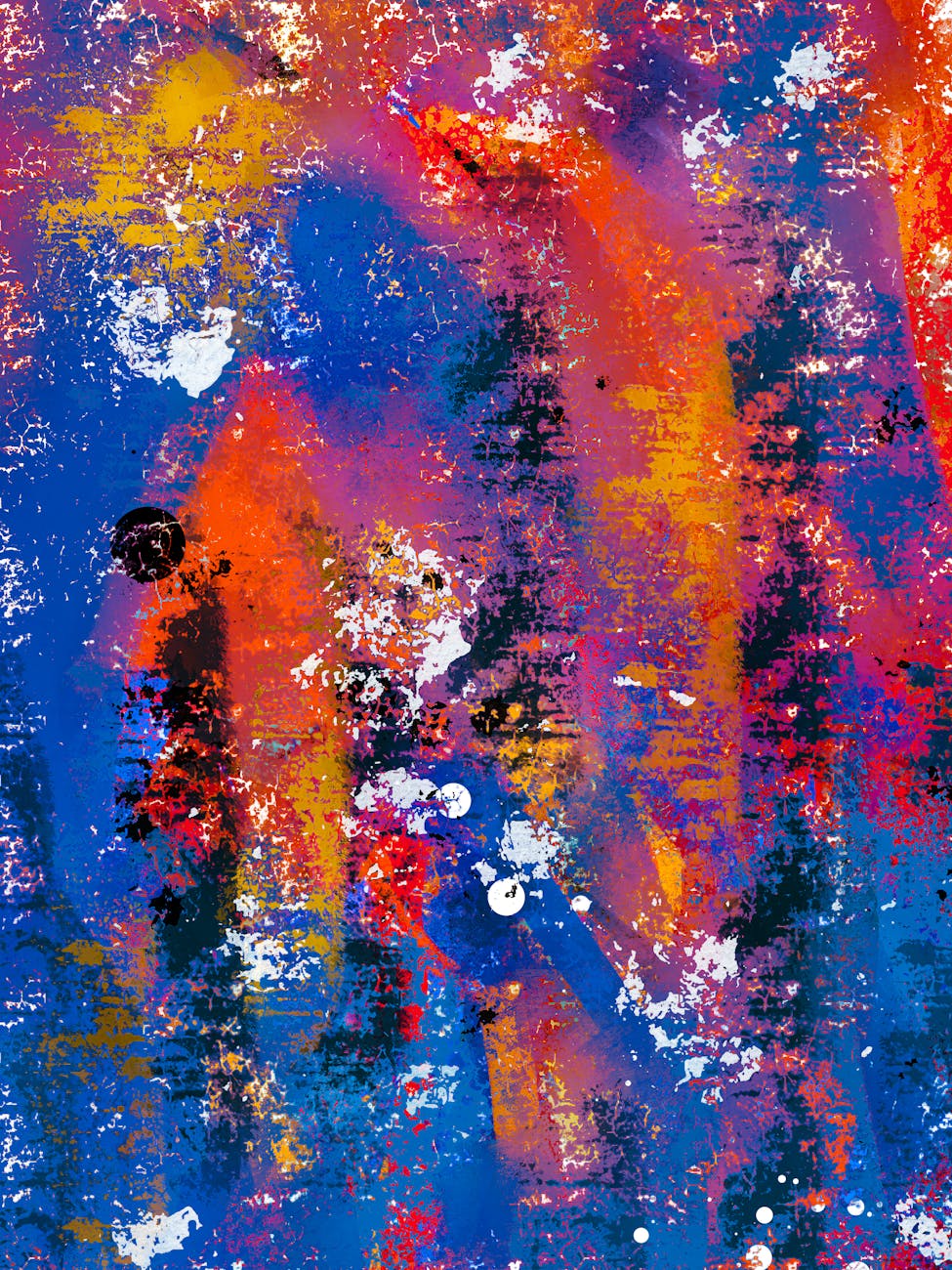
After all, it’s clear how it was this very focus on the experimental, casting off rules and traditions, that ran like a thread through major 19th and 20th century art movements, and runs on today. Unlikely colours, paintings that sum up an atmosphere rather than recreating an exact scene, brushwork that becomes a subject all its own, imaginative ways of using line and motif to create something that feels totally new, the product of one person’s imagination. To some people, doing that feels far more creative than using art to reproduce or recreate what we see around us. I like a balance – and I know some people who find experimental art too confusing or unsettling.
To me, one of art’s greatest gifts is the way it opens up a way to respond to the sheer variety of life, the myriad colours, forms and experiences. It becomes a way to contribute as a participant, not an onlooker – to make your mark, however perfect or imperfect, something that is your very own.
 Medley