
Down comes the rain, and “down” is how many of us will feel. I like early autumn as the sun still shines on leaves starting to tint, and berries and apples ripening in gardens, hedgerows or parks. But by the end of October, autumn feels a lot less positive, particularly as we change the clocks in the UK. So I was intrigued by a review of a new book, Head in the Clouds by Professor Trevor Harley, who is a professor at the University of Dundee, and has shared openly his mental health issues, experiencing OCD, depression and SAD.
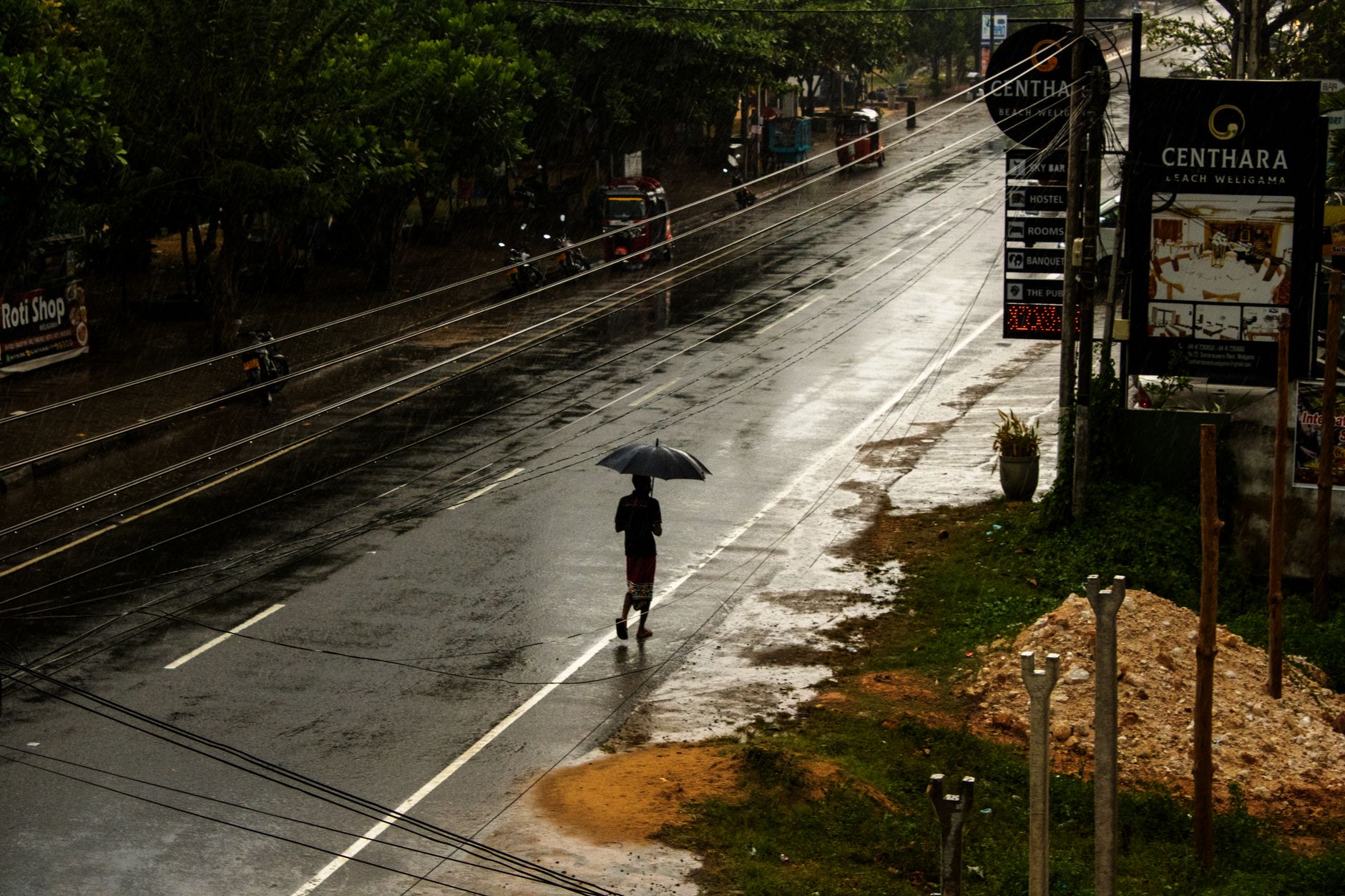
In his book, Harley explores how weather that might feel negative or depressing can prove the opposite. Rain, wind, snow, and thunderstorms can all boost well-being and health in general. For example, he writes how snow can help change perspective and outlook, by muffling outdoor sounds, and even raise light levels by reflecting light.
And he quotes 2024 research which found that being out on a windy day raises our levels of serotonin on dopamine, known as happy or reward hormones. Hearing rain has been found to relax us, lowering stress levels and encouraging sleep. And rainfall releases soil chemicals into the air which reduce inflammation in our bodies and boost serotonin in our brains.
There’s obviously something in all this, and after a summer of heat waves and drought, I have come to appreciate variations in weather, a cloudy day or a heavy shower. I even enjoy going out for a walk in the rain – and find that being outdoors in wet weather feels less depressing than being indoors looking out at a wet scene. It’s something about being active and part of what’s happening.
The book also talks about wet weather boosting productivity, whereas sunny weather can distract us from indoor tasks. As an art for well-being practitioner, I’m wondering how weather and time of year impact on creativity. I know I particularly turn to bright colours on dull or dark days, painting or drawing with bolder shades. Winter can feel like sensory deprivation, with low light levels and the view through my window. More monochrome when there are no leaves on the trees and no flowers. Using bright colours helps counterbalance that. And nature journalling (writing and drawing a record of what I see in nature) is a creative activity which helps me notice beauty in nature even in the colder months, which I might overlook- different types of tree bark, conifers, ivy, even seeing dormant buds and early catkins start to form over winter. Participants in groups I lead say they do more art and craft during autumn and winter, but not all- cold and dark weather can certainly drain energy and motivation, maybe all the more later in winter. Even practicalities can be an issue, like drawing or painting in artificial light, which can change how colours look. I think varying creativity and taking up new visual art forms can help with motivation. I also know I enjoy music more in dull and dark weather. And shadow puppetry is an art form which combines craft and drama and comes into its own after dark.
I met someone recently who likes to see winter as a time for renewal and recharging, and likes the idea of hibernation. Every one of us is different.


I am depressed by poverty, disability, the cost of living, genocides in Gaza, Sudan, the DRC. Extreme weather does not affect my emotional state, it’s not relevant to the fabric of my day to day existence.
Genocides are how all governments would treat their citizens if they knew they would get away with it. And that is far more sobering than the worst thunderstorm in the middle of winter..
LikeLike
Thank you for sharing these thoughts Rona. News and so many issues really can be overwhelming can’t they…I just wanted to explore how the elements too can impact us, albeit in very different ways.
LikeLike